
Correct sizing and realistic expectations
We size by demand and constraints, not guesswork. For tank units that means gallon capacity and recovery; for tankless it means flow rate, fuel type, and venting allowances.
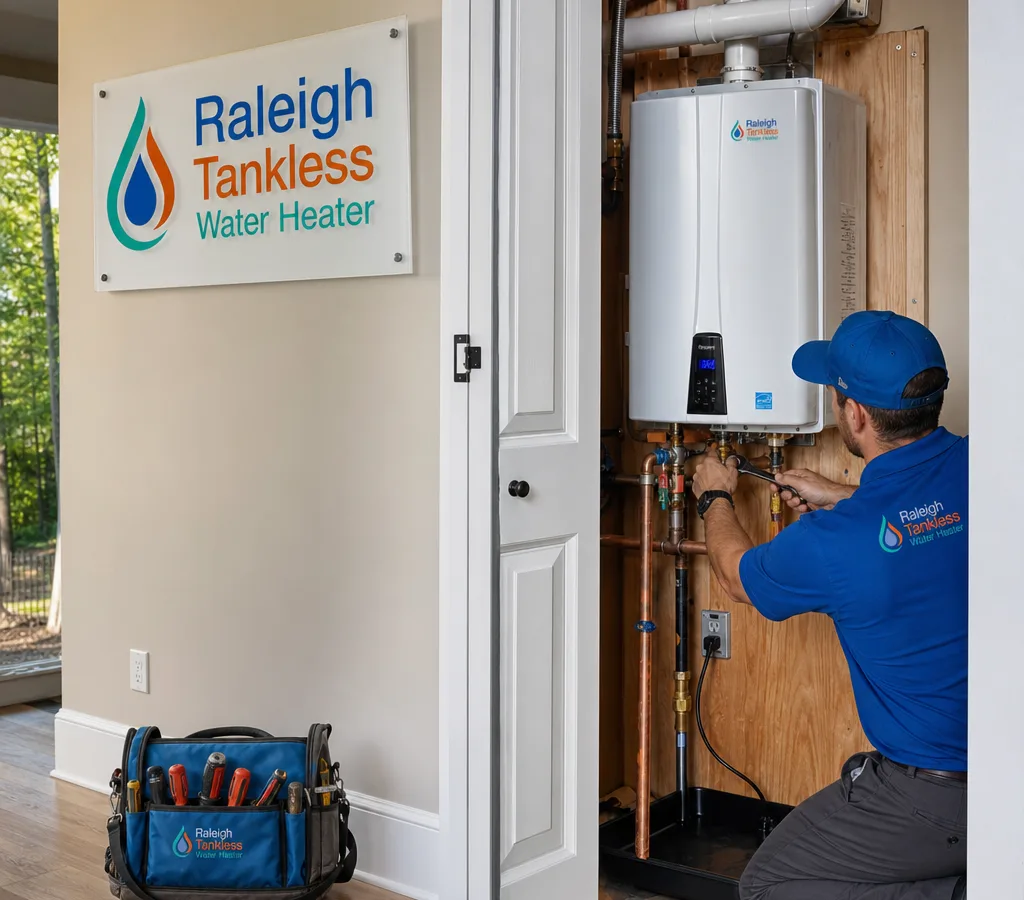
Water Heater Installation · Raleigh, NC
Replace a failing unit fast, upgrade to tankless, and get a clean, code-ready installation with tidy workmanship and straightforward scheduling.
Built Around The Existing Setup
If you are searching for water heater install Raleigh, you are usually dealing with one of two situations: a unit that is leaking or unreliable, or a planned upgrade—often to tankless—to free up space and improve hot water delivery.
A water heater replacement is not a simple swap. The installation has to match the fuel type, venting method, shutoff requirements, seismic strapping where applicable, and local plumbing and gas code. A small mistake can show up later as nuisance shutdowns, slow recovery, temperature swings, or safety issues.
Raleigh Tankless Water Heater installs tank and tankless water heaters for Raleigh homeowners and property managers. We focus on a clean setup, correct connections, and a documented scope so you know what is being replaced, what stays, and what is brought up to code.
If you are still deciding between tank and tankless, our team at Raleigh Tankless Water Heater can walk you through the practical tradeoffs for your home's layout and hot water demand.
Installation Standards
We size by demand and constraints, not guesswork. For tank units that means gallon capacity and recovery; for tankless it means flow rate, fuel type, and venting allowances.
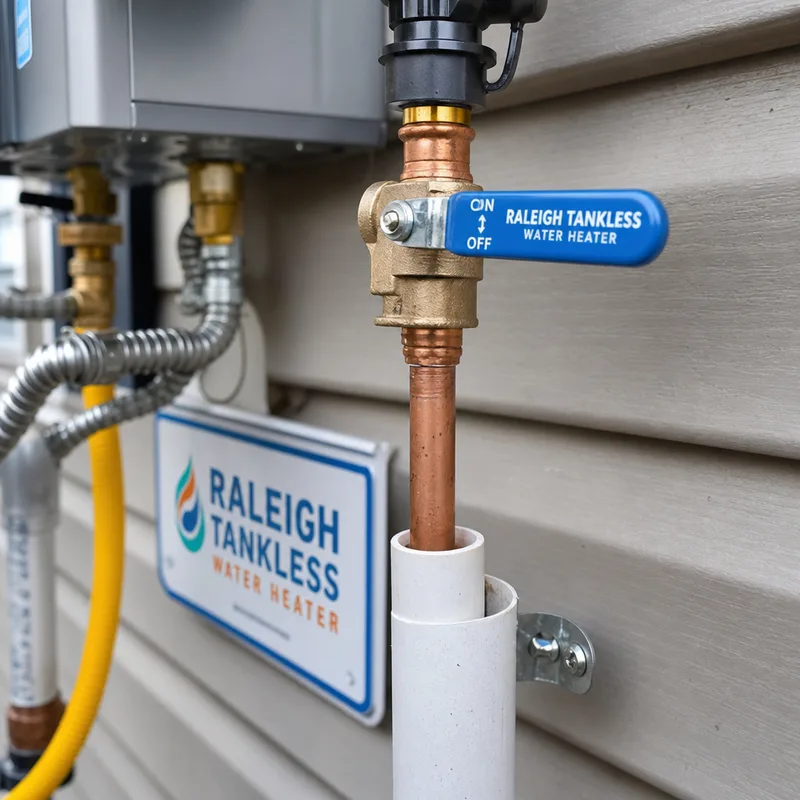
We verify shutoff valves, gas sediment traps where required, venting clearances, and temperature and pressure relief discharge piping so the system is safe and serviceable.
We protect floors, keep the footprint organized, and leave the mechanical area neat so it is easy to access for future maintenance.
If a simple replacement is right, we say so. If a venting change, shutoff upgrade, or drain pan is needed to meet current standards, we explain why before work starts.
When your heater quits, timing matters. We prioritize urgent replacements and keep the scope tight so you can get hot water back quickly.
Compare The Practical Tradeoffs
A standard tank water heater replacement is often the most direct path when the existing setup is in good shape: similar footprint, existing venting, and predictable installation.
A tankless installation can be a great fit when you want wall-mounted space savings or longer continuous hot water, but it can require changes that affect price and timeline. Common considerations include:
In Raleigh, water heaters are often located in garages, utility closets, or attic spaces. Access and drain availability can change what makes the most sense. We discuss the options based on where your unit sits and how you use hot water day to day.
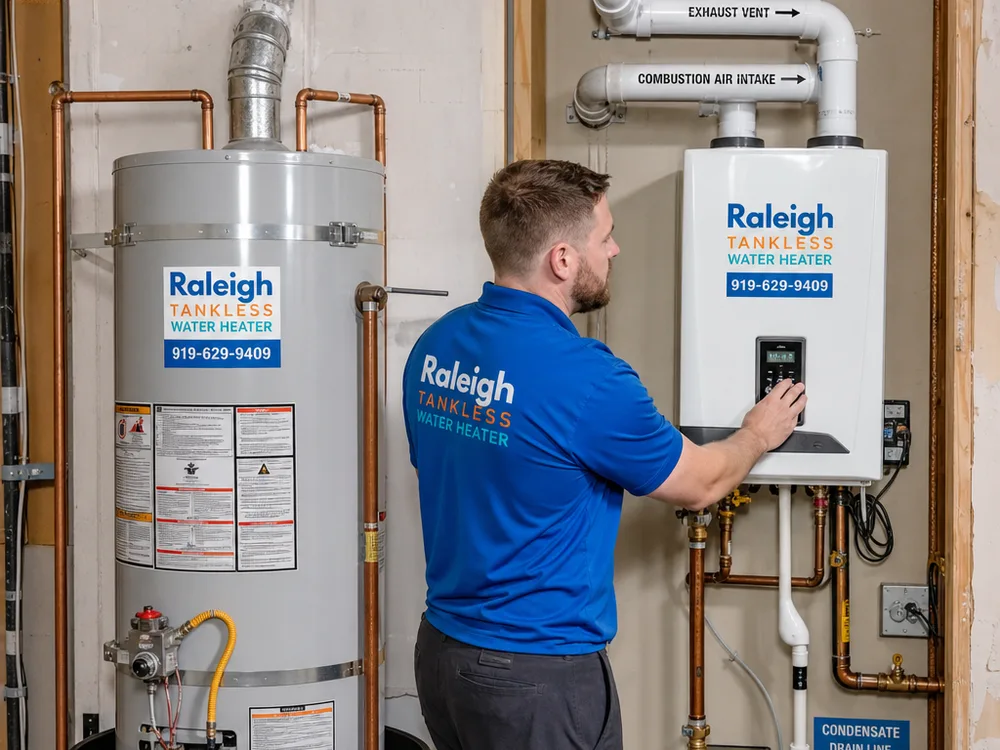
Assessment To Startup
We confirm the existing type, venting, location constraints, and visible code or safety issues. If you are switching types, we identify what has to change.
We shut down utilities, drain the old unit, and prepare the space. Needed drain protection, shutoffs, and service clearances are addressed before the new unit goes in.
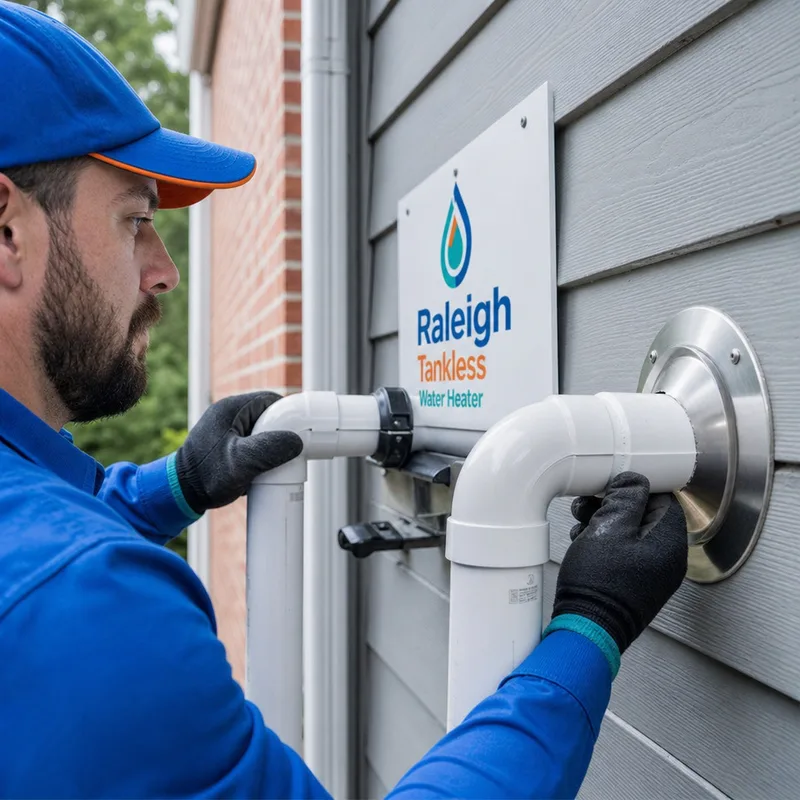
We set the heater, make water and gas or electrical connections, install required valves and relief piping, and complete venting or condensate routing per manufacturer specifications.
We pressurize the system, test for leaks, verify draft or vent performance where applicable, set a safe temperature, and confirm stable hot water at fixtures.
We leave the area clean and explain basic operation, recommended maintenance, and what to watch for during the first week after installation.
Planning Your Investment
Most water heater installation Raleigh NC projects typically range from about $1,200 to $3,500 for a straightforward tank replacement, while many tankless installs land around $2,500 to $7,500+ depending on venting, gas line work, and condensate drainage.
Your final price changes with fuel type, heater capacity, venting complexity, location access, condition of existing shutoffs and piping, and whether you are converting from tank to tankless. The exact cost is confirmed after an on-site assessment.
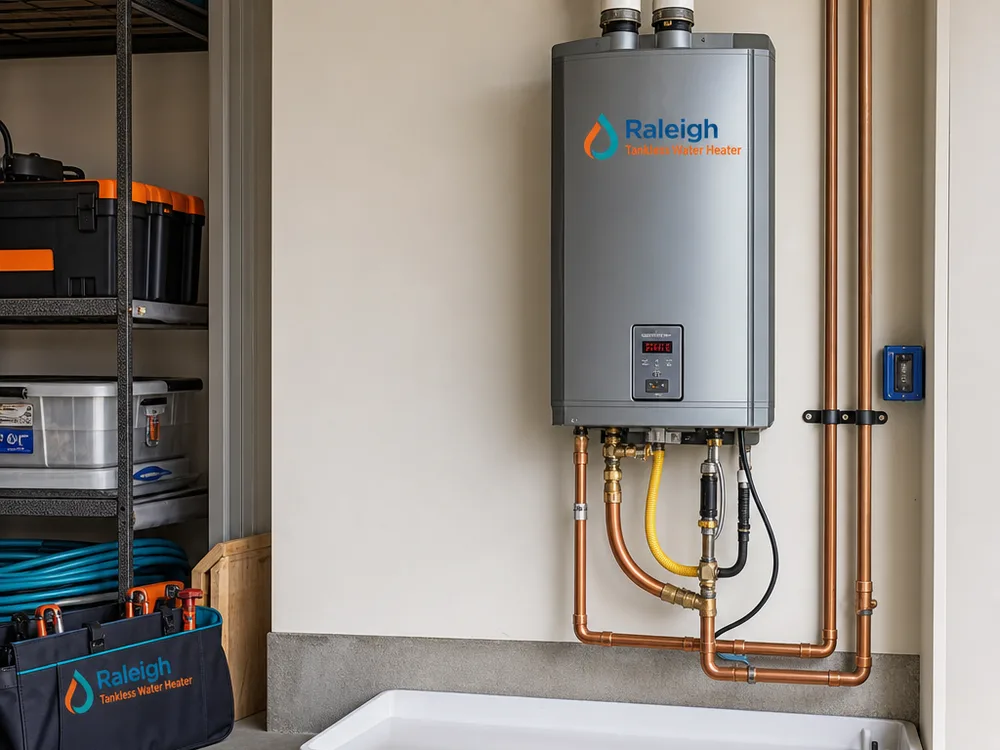
Finished With Future Service In Mind
Common Questions
A straightforward tank replacement is commonly completed the same day, while a tankless installation can take longer if venting, gas piping, or condensate drainage has to be added or modified. The biggest time drivers are access and whether the new unit matches the old venting and utility connections.
Yes, but feasibility depends on venting options, available gas capacity for gas units, a place to route condensate for condensing models, and a nearby electrical receptacle. An on-site check confirms what the existing setup supports and what changes would be required.
Common cost drivers include venting changes, upgraded shutoff valves, corrected relief discharge piping, corroded connections, and improved drain protection. Tank-to-tankless or fuel-type conversions add scope because existing connections and venting often cannot be reused as-is.
We install to current code and manufacturer requirements, and we explain when permitting or inspection is appropriate for the project scope. Requirements can vary between a simple replacement and a conversion, so we confirm what applies after reviewing the existing installation.
If the unit is near the end of its typical service life, shows corrosion at fittings, has recurring pilot or ignition issues, or produces rusty water, planning a replacement can help avoid an emergency leak and gives you more choice in model, venting, and placement.
Photos of the full water heater, the venting above it if gas, and the nearby water and utility connections are helpful. If you know the current tank size or model number, share that too. We can narrow the options and confirm details during the on-site assessment.
Plan The Replacement
Tell us what you have now—tank or tankless, gas or electric—and where it is located. We will confirm the right size, explain venting or connection changes, and provide a clear scope before installation day.